

Marrakech to Merzouga in 3 Days: Itinerary and What to Expect
A three-day trip from Marrakech to Merzouga gives you a journey through the Atlas Mountains, visits along the southern route and a night beside the dunes of Erg Chebbi. It also means long days on the road. Understanding that balance is the key to enjoying the experience.
This Marrakech to Merzouga itinerary follows a three-day, two-night route: a hotel stay in Dades Valley on the first night, followed by a desert-camp stay at Erg Chebbi on the second night. The shared tour costs €90 per person, with the return to Marrakech on day three.
Three days can work well if you want to see the Sahara during a shorter Morocco holiday and are comfortable travelling between stops. Think of it as a road trip with a desert overnight experience. The mountain roads, villages, kasbahs and valleys are a substantial part of the journey.
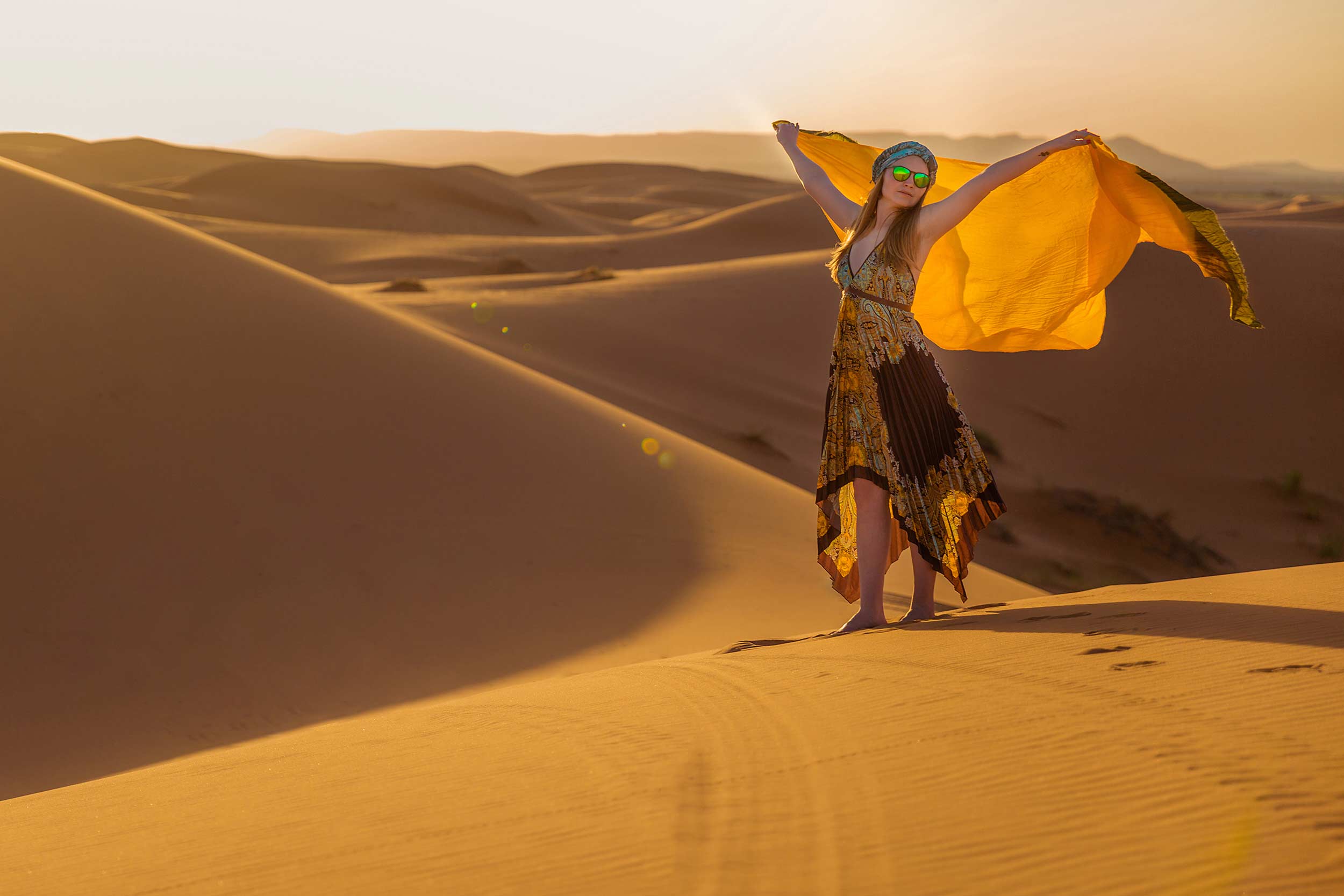
Your Marrakech to Merzouga itinerary at a glance
| Day | Main route and experiences | Overnight stay |
|---|---|---|
| Day 1 | Marrakech, High Atlas Mountains, Ait Ben Haddou, Ouarzazate and Dades Valley | Hotel in Dades Valley |
| Day 2 | Dades Valley, Todra Gorges, Merzouga and the Erg Chebbi dunes | Desert camp at Erg Chebbi |
| Day 3 | Desert morning and the return journey to Marrakech | No accommodation included after returning to Marrakech |
The important distinction is that three days does not mean three full days in the dunes. You reach the Merzouga area on the second day, spend that night at camp and begin the return journey the following morning.
How much time will you spend on the road?
Marrakech and Merzouga are far enough apart that transport shapes the whole itinerary. A driving estimate covers time in the vehicle. Your full travel day also includes collecting guests, sightseeing, meals, comfort breaks and accommodation check-in.
Allow the itinerary to occupy three complete days. Keep the evening after your return flexible rather than building your plans around an exact arrival time. Mountain-road conditions, traffic and the length of stops can all affect progress.
Keep water, a light layer and anything you want during the drive in a small bag beside you. This is more convenient than needing to open your main luggage at every stop.
Day 1: Marrakech to Dades Valley through the High Atlas
Departure and the mountain journey
The first day begins with departure from Marrakech and the journey across the High Atlas Mountains via Tizi n’Tichka. The scenery changes as you leave the city behind, with mountain slopes and villages becoming part of the view.
Confirm your collection time and meeting point before departure. If you are staying in a riad, knowing exactly where to wait is more useful than relying only on the accommodation’s address. Arrange breakfast around the confirmed departure schedule and have your luggage ready before pickup.
A stop at Ait Ben Haddou
Ait Ben Haddou is one of the main sightseeing stops on the route. Its earthen buildings and clustered lanes give this part of the journey a different character from the mountain crossing. Wear shoes that are comfortable for walking on uneven surfaces, and keep sun protection accessible.
The local guide at Ait Ben Haddou is not included in the shared-tour price. Ask about the cost before joining a guided visit, and clarify which meeting point and departure time apply to your group. Lunch and drinks are also separate expenses.
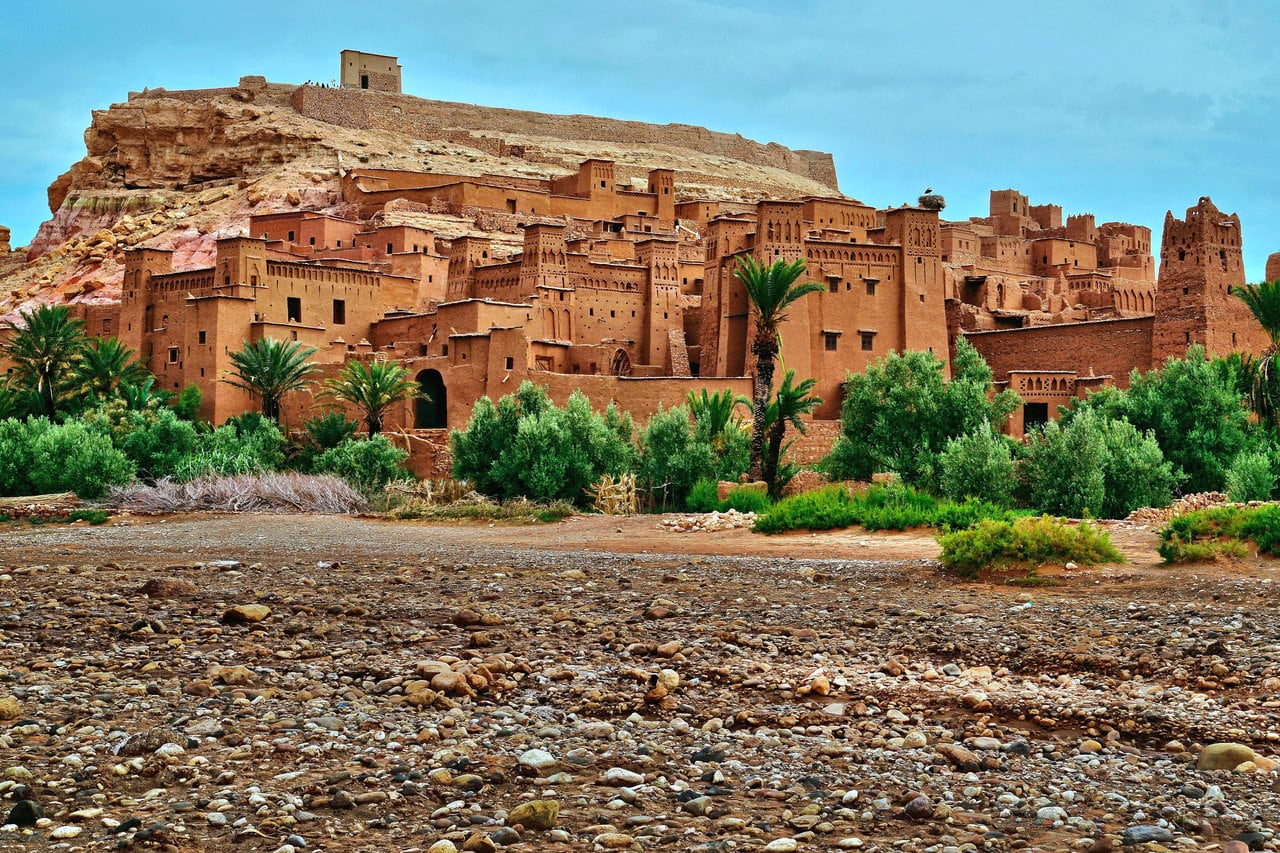
Ouarzazate and the Dades Valley overnight stop
The journey continues through Ouarzazate towards Dades Valley. Passing through a destination does not automatically mean every attraction there is included. In particular, treat additional sightseeing visits according to the confirmed programme.
Your first overnight stay is at a hotel in Dades Valley. Dinner is included, followed by breakfast the next morning. This stop breaks up the outward journey before you continue towards Todra Gorges and Merzouga.
Use the evening to recharge your devices and prepare a smaller bag for the next day. Having your camera, clothing layer and overnight essentials together makes the transition to the desert easier.
Day 2: Todra Gorges, Merzouga and a night at Erg Chebbi
From Dades Valley to Todra Gorges
After breakfast, the route continues towards Todra Gorges. The rock walls and valley scenery provide a contrast to the open landscapes ahead. Follow your driver’s instructions about where to walk and when to return, especially when travelling with a shared group.
This remains a travel day, with time divided between the road, stops and the approach to Merzouga. Keep your expectations realistic about the length of each visit: the programme also needs to leave time for reaching the dunes and camp.
Arrival in Merzouga and the camel experience
Merzouga is the gateway to the Erg Chebbi dunes on this itinerary. Camel trekking is included in the tour, bringing you into the landscape that many visitors picture when planning an overnight Sahara desert trip.
The precise riding schedule depends on the confirmed programme and daylight. Your booking should explain the expected ride duration and the arrangements for reaching camp.
Keep valuables and essentials with you, and clarify where larger luggage will remain during the camel activity. If you do not want to ride, discuss the arrangements before booking so that any available alternative and its cost are agreed in advance.

What to expect at the desert camp
The second night is spent at a desert camp at Erg Chebbi, with dinner and the following morning’s breakfast included. The change of pace is part of the appeal: after the road journey, you can settle into the evening and enjoy the desert surroundings.
The booking form offers standard and luxury camp choices. Before choosing, look at the details that affect your comfort: whether your tent is private, bathroom arrangements, bedding, electricity and any seasonal heating or cooling facilities. A category name alone does not answer those questions.
Day 3: A desert morning and the return to Marrakech
The final morning combines breakfast, camp departure and the start of the return journey. If you want to be awake for the early light, ask the team about the morning schedule the night before and pack most of your belongings in advance.
The return to Marrakech is a substantial travel day. Have the things you need during the journey close at hand and use the planned breaks to stretch your legs. Lunch and drinks remain outside the included meal plan.
Keep your plans for that evening simple. An estimated return time is useful for planning, but it should not be treated as a guarantee for a flight, train connection or timed reservation. Your driver can provide a clearer arrival estimate as the journey progresses.
What does the €90 shared Merzouga tour include?
The confirmed shared-tour price is €90 per person. The programme includes:
- Shared transport and a driver.
- One hotel night in Dades Valley.
- One desert-camp night at Erg Chebbi.
- Camel trekking.
- Two dinners and two breakfasts.
Budget separately for lunches, drinks and the local guide at Ait Ben Haddou. Optional upgrades can change the final amount, so review the total for the transport and camp choices you select.
You can view the 3-day Sahara tour itinerary and booking options to choose your date and see the available arrangements.
A short checklist before reserving
Check the collection point, accommodation category, tent arrangements and any extras you intend to add. Read the deposit and cancellation conditions shown for this specific tour. If you are comparing a shared departure with private transport, compare the actual programme and quotation as well as the vehicle arrangement.
These details are more useful than choosing on the headline price alone. A clear booking should tell you what you are paying for and which expenses you will still have during the trip.
What to pack for a three-day Sahara desert trip
Pack for travelling, walking and an overnight stay. A manageable bag is easier to organise across the hotel and camp than several loose bags.
- Comfortable clothes and layers: choose clothing suited to the forecast for both the route and the desert, including something warmer for the evening when needed.
- Closed walking shoes: useful for sightseeing stops and uneven ground.
- Sun protection: sunglasses, a hat and sunscreen, kept somewhere accessible.
- A small day bag: for water, valuables, your phone and the items you need between stops.
- Charging equipment: bring your usual charger and a charged power bank.
- Personal essentials: toiletries and any medication you normally need.
- Money for extras: allow for lunches, drinks, optional guiding and personal purchases.
Check the forecast close to departure rather than packing only for the weather in Marrakech. Avoid relying on a generic “desert packing list” that ignores the season, the mountain crossing or the facilities of your chosen camp.
Should you choose three days or four?
The three-day route suits travellers who can dedicate three full days to the journey and are comfortable combining sightseeing with significant road travel. It delivers two different overnight settings: Dades Valley first, then the Sahara camp.
If you have another day available, compare the 4-day Marrakech to Merzouga itinerary before deciding. That programme adds a third overnight stay in Ouarzazate, breaking the return to Marrakech across days three and four. The main benefit is how the return journey is divided, rather than an assumption that you spend a whole additional day in the dunes.
If your main concern is the amount of travel involved, our Agafay vs. Sahara guide helps you decide whether a shorter outing near Marrakech or a multi-day journey to the dunes fits your holiday better.
Frequently asked questions
Is three days enough for Marrakech to Merzouga?
Three days allows the itinerary described here: one night in Dades Valley, one night at an Erg Chebbi camp and the return to Marrakech. It is a busy road trip, so choose it with the travel time in mind.
How much time do you spend in the dunes?
You arrive in the Merzouga area on day two and leave on day three. The camel activity, camp evening and desert morning make up that part of the trip. The exact timing follows the confirmed programme.
Can you bring a suitcase?
Ask about luggage space before departure, especially if you are travelling with a large case. A smaller bag for camp essentials is practical. Confirm where your main luggage stays during the camel activity rather than assuming it travels with you.
Are the camp bathrooms private or shared?
That depends on the accommodation option you book. Check the facilities attached to your chosen tent category. If a private bathroom is essential, have that arrangement confirmed before paying for an upgrade.
Can you join without riding a camel?
Raise this before reserving. The team can explain whether an alternative is available for your departure and whether it changes the price or timing. Do not leave the arrangement until the group reaches Merzouga.
Is the trip suitable for children?
Consider how your children manage long vehicle journeys, walking stops and different overnight settings. Share their ages when enquiring so that seating, sleeping arrangements and activity suitability can be discussed for your family.
Can the trip finish in Fes instead?
The itinerary in this guide returns to Marrakech. If you want to continue to Fes, request the onward-travel arrangements separately before booking. Confirm the transport, arrival plan and price for that version of the journey.
Plan your Marrakech to Merzouga trip
If this balance of sightseeing, road travel and a desert overnight stay suits your plans, explore the 3-day Merzouga tour. The shared tour is €90 per person, with the first night in Dades Valley and the second at Erg Chebbi. For help choosing transport or accommodation, contact us with your dates and group size.


