
Best Time to Visit the Sahara Desert from Marrakech: A Month-by-Month Guide
The best time to visit the Sahara Desert from Marrakech is usually spring or autumn. For a first trip to Merzouga and the Erg Chebbi dunes, start by comparing March, April, October and November. These months generally offer a more comfortable balance for sightseeing, a camel ride and a night at camp than the height of summer.
Your ideal month also depends on how you feel about cold evenings, how much time you have and what you want from the journey. Winter can suit travellers who prefer cooler days and will pack properly for camp. Summer needs a much more cautious approach to heat, especially when travelling with children or anyone sensitive to high temperatures.
This guide focuses on Merzouga and Erg Chebbi in southeastern Morocco, reached on multi-day trips from Marrakech. It does not describe every part of the Sahara. You also cross the High Atlas and travel through valleys, so the forecast at your desert camp is only part of the planning.
When to go: the quick answer
- March and April: strong choices for a first Sahara trip, with layers for the evening and flexibility for wind.
- May and September: useful shoulder months, but afternoon heat can still shape your day. Early May and late September are worth comparing.
- October and November: another good window for dunes and sightseeing, with progressively cooler nights.
- December to February: consider these for cooler daytime exploration if you are comfortable preparing for cold nights.
- June to August: the most demanding period for heat. Prioritise accommodation, cooling and activity timing over a packed itinerary.
The Moroccan National Tourism Office recommends spring and autumn for the Sahara. The month-by-month advice below translates that seasonal pattern into practical trip planning. It is guidance, not a forecast or a guarantee of particular conditions.
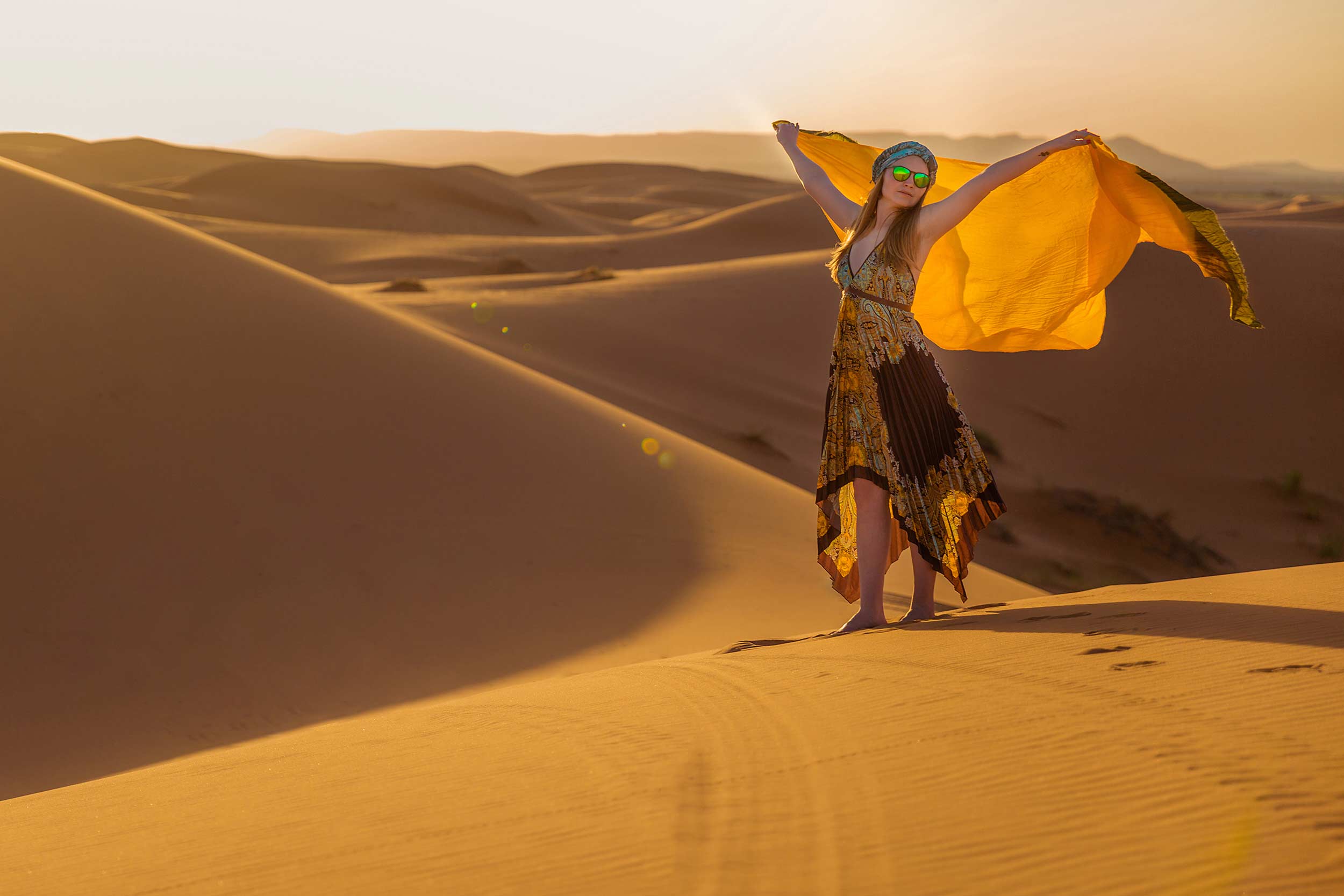
Sahara weather month by month
Conditions change from year to year and between the beginning and end of a month. Use these descriptions to narrow your dates, then check the forecast for Marrakech, the Atlas route and Merzouga before departure.
January: winter days, seriously cold evenings
January is a winter trip, even when the dunes look warm in photographs. Daytime walking may feel pleasant in sunshine, but mornings, shaded stops and camp evenings can be cold. Choose it if avoiding summer heat matters more to you than sitting outside in light clothing after dinner.
Ask what bedding is supplied and whether your specific tent has heating. Pack a warm jacket, thermal layers, thick socks and a hat. Leave flexibility around the mountain crossing rather than connecting straight from the return drive to a flight.
February: a cool-season option with layers
February remains a good candidate for travellers who prefer cooler sightseeing weather. It is still too early to pack as though spring has fully arrived. A sunny afternoon and a cold pre-dawn start can belong to the same camp stay.
Use removable layers so you can adjust between the vehicle, walking stops and the dunes. If sunrise photography is a priority, keep gloves and a warm outer layer beside your overnight bag. Confirm the morning schedule rather than assuming you will have unlimited time before departure.
March: a balanced spring starting point
March is one of the first months to consider for a Marrakech-to-Sahara holiday. It can offer a useful balance between daytime exploration and comfortable travel, although cool nights still deserve attention. Spring wind can bring blowing sand, so keep your plans for a particular sunset or camel departure flexible.
Carry sunglasses and a scarf, and protect your phone or camera when the wind rises. A light daytime outfit plus a proper evening layer is more useful than packing only for the warmest part of the day.
April: a strong all-round choice
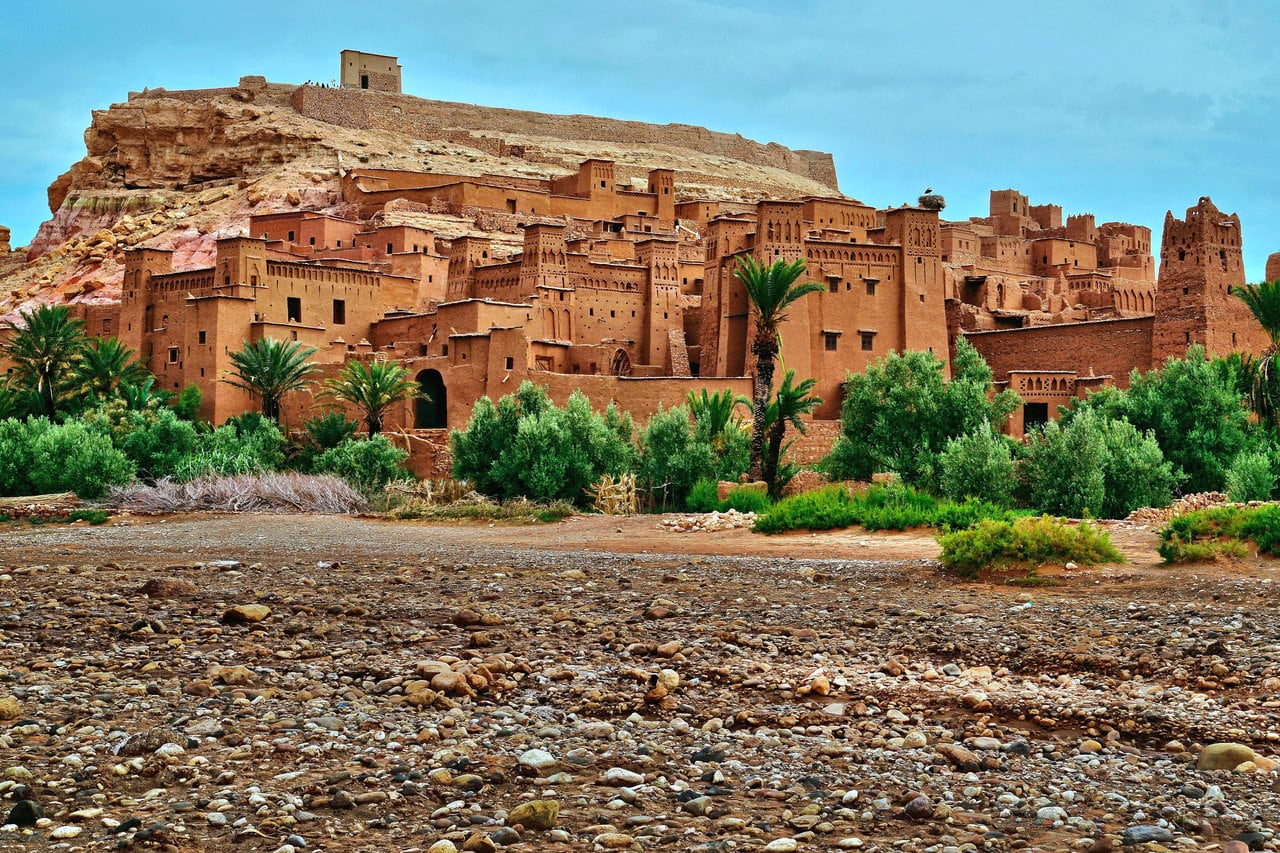
April often suits a first desert visit: time at Ait Ben Haddou, a valley stop and an evening in the dunes can fit together without planning everything around peak summer heat. Sun protection still matters, and the open sand offers little shade.
Check availability early if your dates overlap school holidays or Easter. Do not assume that a quieter-looking calendar means a particular camp will be empty. Ask about the actual tent, bathroom and transfer arrangements, especially if several people in your group have different comfort needs.
May: longer evenings and rising heat
May can work well if you enjoy warm days, but it is a transition towards summer. Early and late May may feel quite different. Build in breaks during sightseeing and keep water accessible rather than packed under your main luggage.
For a camel outing or dune walk, ask how the timing is adjusted to the day’s conditions. Longer daylight gives the itinerary more room, but it does not remove the distance between Marrakech and Merzouga. Avoid adding extra stops simply because sunset is later.
June: plan around the hottest hours
In June, heat becomes a central planning issue. The important question is not just whether tours operate, but whether the transport, accommodation and daily rhythm suit you. Check vehicle air conditioning and the cooling facilities in the room or tent you would actually book.
Keep strenuous activity out of the hottest hours and discuss shorter alternatives before reserving. A tent described as luxury does not automatically provide reliable air conditioning. Ask when cooling operates and whether you can rest in a genuinely cool indoor space during the day.
July: the most heat-conscious planning
July belongs to the peak summer-heat period and is not our first recommendation for a comfortable introductory Sahara trip. An early start or sunset outing reduces time in the strongest sun, but does not turn the whole journey into a cool-weather experience.
If July is your only travel window, talk through the itinerary before paying. Consider a cooled hotel base, limited outdoor activity and the option to change plans in extreme conditions. Heat-sensitive travellers should consider a different season rather than relying on a short camel ride to solve the issue.
August: summer conditions still dominate
August requires the same careful approach as July. Do not assume an overnight stay will become comfortably cool just because the sun has set. Rest, access to drinking water and suitable accommodation matter more than fitting every possible activity into one evening.
Ask whether your proposed camp stay is advisable for the forecast and your group. If the answer involves changing accommodation or omitting an activity, confirm the practical and financial details in advance. A flexible plan is more valuable than a promise to follow a fixed programme regardless of conditions.

September: a gradual move towards autumn
September is a transition, not an instant end to summer. The start of the month can still call for summer-style planning, while later dates are often a better starting point if you want to avoid the strongest heat. Look at your exact week rather than relying on the month’s label.
Keep light, covering clothing and sun protection in your bag, with an extra layer for the evening. Discuss current conditions shortly before departure. Rain is possible in desert regions, and a dry-looking landscape does not mean roads are unaffected by a storm.
October: a favourite for a first visit
October is one of our strongest starting recommendations for balancing the road journey, sightseeing and camp experience. Days are generally less demanding than midsummer, while the evenings invite an extra layer rather than a summer-only wardrobe.
It is still important to check the forecast and accommodation availability for your dates. For photography, allow time to enjoy the changing light without promising yourself a specific sky. Cloud, wind and the arrival schedule all affect what you see, even in a well-chosen month.
November: cooler exploring, warmer packing
November is worth considering if you prefer cooler days and do not mind packing for a cold evening. The seasonal shift becomes more noticeable as the month progresses. Have warm clothing accessible before reaching camp, not buried in luggage left elsewhere.
Shorter daylight makes an orderly departure and realistic sightseeing stops important. Confirm bedding and ask what happens if the route is disrupted. Choose your trip for the complete journey through southern Morocco, rather than only the few minutes when the sun reaches the horizon.
December: a winter escape with practical preparation
December can be rewarding for travellers who like winter sunshine and are ready for cold nights. Treat the mountain journey and camp stay as winter travel, even if you start the day in a bright Marrakech courtyard. Thermal layers and a warm jacket are sensible additions.
If you want to travel around Christmas or New Year, ask early about availability, the exact programme and any special arrangements. Do not assume a festive dinner or celebration is included. Leave a margin after returning to Marrakech in case weather changes the driving schedule.
Plan for the route, not only the dunes
A Sahara trip from Marrakech combines several settings. The standard route crosses the High Atlas, visits Ait Ben Haddou and continues through southern valleys before Merzouga. A comfortable desert afternoon does not tell you what the mountain road or your first overnight stop will feel like.
For the sequence of stops, read our Marrakech to Merzouga three-day itinerary. The 3-day Sahara tour includes a Dades Valley overnight stay and an Erg Chebbi camp night. Three days means a road trip with a desert overnight experience, not three full days among the dunes.
If you have more time, compare the 4-day Marrakech to Merzouga tour. Its Ouarzazate overnight stop breaks up the return journey. Check the programme carefully rather than assuming an extra tour day automatically means another night at camp.
In poor weather, follow your driver’s and local authorities’ advice about delays or route changes. Heavy rain can cause flash flooding, particularly around mountains and rivers, as noted in the UK travel advice for Morocco. Never treat a fixed itinerary as more important than current road conditions.
What to pack for each season
- Every month: sunglasses, sunscreen, a sun hat, comfortable closed shoes, loose clothing that covers your skin and a refillable water bottle. Arrange a safe supply of drinking water along the route.
- Spring and autumn: a fleece or sweater, long trousers and a light wind-resistant outer layer. Keep a scarf handy for breezy conditions.
- Winter: a warm jacket, thermal base layers, thick socks, a hat and gloves. Ask about camp bedding before deciding whether you need additional sleeping equipment.
- Summer: lightweight, breathable layers, dependable sun protection and a plan for cooled rest periods. Packing alone cannot make extreme heat comfortable.
- For camp: a small overnight bag, a torch or headlamp, your usual personal essentials, a charged power bank and a protective pouch for electronics.
Keep the clothes you need for the evening with you during the transfer to camp. Ask where larger luggage stays and whether you need to separate it before the camel activity.
Frequently asked questions
What is the single best month to visit the Sahara from Marrakech?
April or October is a sensible starting choice for many first-time visitors. Neither guarantees ideal weather. Compare your exact dates, how you handle warm days and cold nights, and the facilities of the accommodation you intend to book.
Is the Sahara too cold in winter?
It can be too cold for an unprepared camp stay, but winter is still an option for travellers who prefer cooler daytime exploring. Confirm bedding and heating, bring warm layers and check conditions on the mountain route as well as in Merzouga.
Can you visit Merzouga in summer?
Trips may be available, but availability is not the same as comfort or suitability. June through August requires serious attention to heat, activity timing and cooling. Discuss your group’s needs and the forecast before deciding, and be willing to change the plan.
Does it rain or get windy in the desert?
Yes. A desert climate does not mean rain-free or wind-free travel. Blowing sand can affect visibility and outdoor activities, while heavy rain can disrupt roads. Keep equipment protected and follow local guidance rather than insisting on a particular activity time.
When is best for stargazing?
Choose a night with little moonlight and a clear forecast, then consider camp lighting. A date near a new moon can help, but cloud, dust and artificial light still matter. No month guarantees a clear view of the stars.
Do Ramadan and holidays affect the trip?
They can affect daily routines and demand independently of the weather. Ramadan follows a lunar calendar, so its dates change each year. Confirm departure times, meal arrangements and any altered opening hours for your actual travel dates.
Choose your Sahara travel dates
For most first visits, begin with spring or autumn, then choose a trip length and camp arrangement that match your comfort needs. Check a current Merzouga forecast close to departure and review conditions along the route. Seasonal guidance helps you choose; current weather helps you prepare.
Contact Marrakech Desert Tour with your travel dates, group size and preferred level of accommodation. We can discuss the available itinerary and arrangements before you decide.


